
Kachay Colombia
Guide to travel in Colombia
Guide to travel in Colombia
April 20, 2026
HOW EXPENSIVE IS COLOMBIA? By: Jaime Rincón
One of the biggest concerns when traveling is the Budget. How expensive the destination is, can be a key factor in choosing a place.
Colombia is considered an affordable country for travelers, although this is relative, depending on your country of origin or the destination within the country, as prices have generally changed in recent years. Let's take a closer look at this.
According to your country of origin
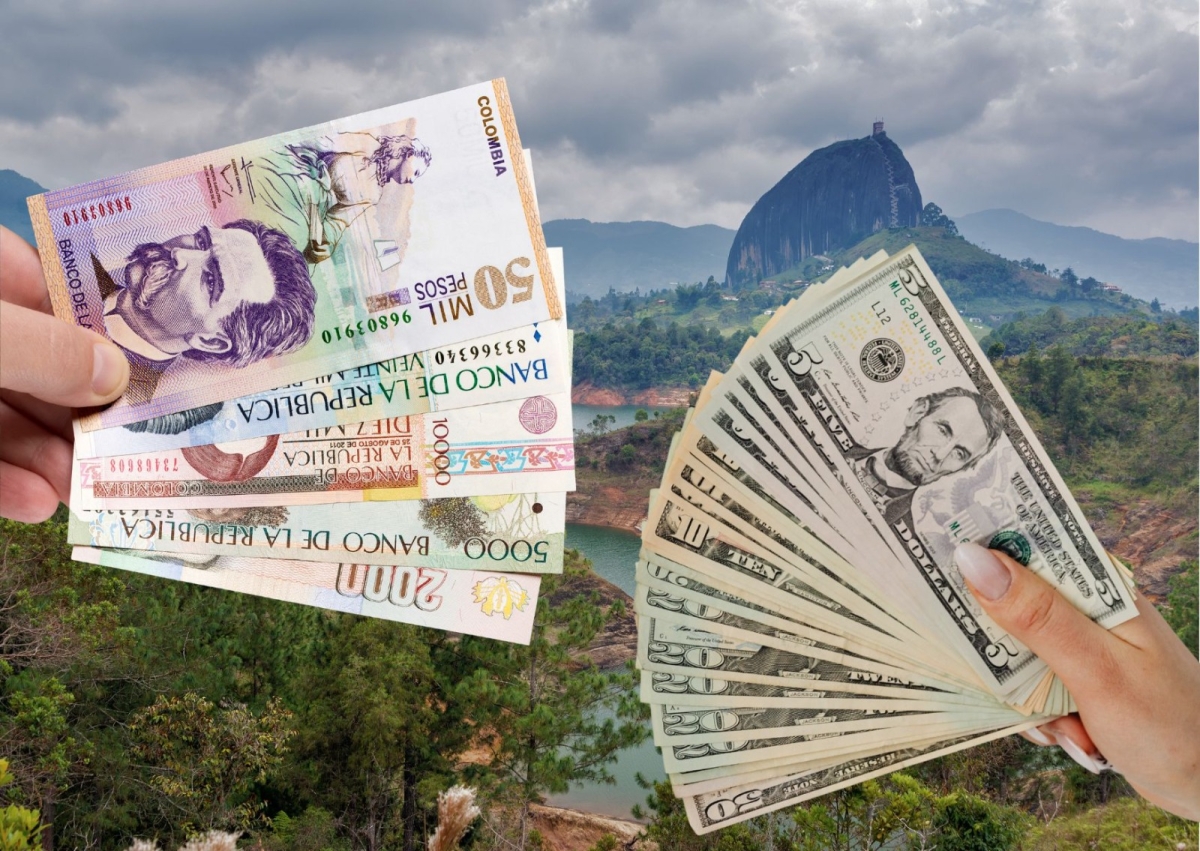
The currency in Colombia is the Colombian Peso (COP), which uses very large denominations. In Colombia, people talk about thousands and millions when paying for something, and this can be confusing for those accustomed to currencies that use smaller numbers like tens and hundreds.
If you are coming from the United States or another country that uses the US dollar, you should know that the USD (US Dollar) to COP (Colombian Peso) exchange rate changes daily. At the time of publication of this article, the exchange rate is USD 1 = COP 3,612. It can fluctuate by up to 5% each day, depending on international market movements and the political situation of the country. It is very rare for the USD to fall below COP 3,000 or rise above COP 4,000, so you can calculate the exchange rate within this range. For those who use USD, Colombia is economical, as prices are generally lower than what they are used to. For example:
A meal in a good restaurant can cost between COP 40,000 and 80,000, or between USD 11 and 22, which is up to 50% less than what is paid in many developed countries.
A soft drink or a beer at a supermarket can cost between COP 3,500 and 6,500, or between USD 1 and 1.80, which is also quite affordable.
For other developed countries like Canada, Australia, and Europe, Colombian prices are generally also a good deal, as they are used to paying more for goods and services. They can use the examples given with the US dollar to convert to their own currency and draw their own conclusions.
As for developing countries like those in Latin America, Colombian prices are very similar. I know from personal experience that in countries like the Dominican Republic, Mexico, Peru, Chile, and Ecuador (even though it uses USD), prices are quite similar for most products when converting from their respective currencies.
According to the destination within the country
Colombia is a very diverse country, and each of its regions presents geographical, cultural, and even economic differences; buying a product in Bogotá or Medellín (major cities) is not the same as buying one in Armenia or Neiva (smaller cities).
In recent years, several places in the country have become favorites among international travelers, and this has caused prices in general to rise significantly in these areas. Another reason for the increase is the quality of life and conditions of the location. In this sense, the most expensive places in Colombia are Cartagena, Medellín, and Bogotá. The rest of the country has lower costs, even in regions that are also receiving tourism but are not yet as well-known, such as the Coffee Region, Santa Marta, or Santander. It should be noted that not everything is set in stone, and in each region, you will find products and services of all categories, and even in expensive cities, you can find Good deals if you know where to look. For example, every place has its famous hotel areas, where everything is extremely expensive, but if you venture outside of that area you could find accommodation and other goods at a much lower price.
A good example of this is what happens in Medellín, where the vast majority of tourists stay in the El Poblado neighborhood. Prices there have reached international levels, where even visitors from developed countries find it expensive. A hotel room for two people can average around USD 240 per night, a meal at a restaurant around USD 25, and a beer at a bar around USD 6. If you were to stay in a less popular area, like Sabaneta, a hotel room would cost around USD 80 per night, a meal around USD 10, and a beer around USD 2.
In conclusion, if you follow the crowds and visit the most popular destinations, doing what everyone else does, you'll end up paying more than if you seek out less crowded destinations or at least venture outside the tourist areas of major cities. It's a matter of doing some research or getting advice from an expert, because the alternative areas aren't bad; in fact, they can give you a more authentic experience and a true impression of local life, while the tourist areas are more full of foreigners than Colombians, and you can even hear more English than Spanish with that pleasant Colombian accent.
Tendencies
Colombia continues to solidify its position as one of Latin America's most important tourist destinations, and the number of international visitors rises year after year. This surge in demand also causes prices to increase proportionally, especially in popular destinations like Cartagena, Medellín, and Bogotá. Therefore, you should know that the longer you wait to plan your trip to Colombia, the more expensive it will be, as prices are aligning with the world's most sought-after destinations.
Furthermore, since the end of 2024, the Colombian Peso has been strengthening and has become the strongest currency in Latin America and one of the most valuable in the world, meaning it has been gaining value against the dollar.
The reason for this is not only the strong performance of the Colombian economy but also the enormous amount of remittances sent by Colombians living abroad, which has become one of the country's largest sources of income, even surpassing exports of oil or coffee. In 2025, remittances reached USD 13 billion.
With the influx of dollars, the Colombian market is flooded with US currency, causing its value to fall in the country compared to the Colombian peso. This, in turn, means tourists are buying less and less with the dollars they bring with them. The geopolitical situation could reverse these trends at any moment; the economic future is uncertain, but for now, we can say that Colombia is becoming an increasingly expensive tourist destination.
